The first labyrinth you’ve heard of…Greek gods were once again bored dull and wanted to probe the chinks of humans’ faulty character armour.They chose their target strategically – the mighty king Minos, a supposedly morally-robust character type which ancient society wasn’t generous in. So perhaps the difficulty level was set to high. They tasked him with sacrificing a handsome bull in order to prove why he and not his brothers should rule over Crete. But, of course, Minos acted like anyone who has to pay back borrowed cash from a friend, and backed out on the deal, replacing the bull with another, cheaper model.
By then I can’t tell if Greeks had learned their lesson that their omniscient gods abide by no rules, but Poseidon, embittered by Minos’ tomfoolery, pulls a grotesque number on him by making his wife lust over the coveted bull. Faster forward and she’s given birth to the Minotaur, a half-man half-bull beast which Minos orders to be put away lest it ruins his re-election campaign. Daedalus is then commissioned to design a labyrinth so intricate he could barely escape it himself. Inside we place the Minotaur and start asking ourselves – is slaying the Minotaur or escaping the labyrinth the main quest of the puzzle?
Should I stay or should I go (out of the labyrinth)?Mazes and labyrinths bear equal significance in literature and art. They test our sense of calm and let intuition guide us out of them. Other than entertainment, the story of the minotaur fed audiences with a tale of initiation. As expressed by Herman Kern, the idea of escaping a singular, central space encircled by layers of walls with only one entrance hints at a process of maturity that takes spatial awareness, sobriety of mindset, and rational decision-making. Qualities at the disposal of an adult more than to a child. Once inside the labyrinth, you are cut off from reality and your past life, driven only to proceed to the heart of the construction. In some Bronze Age sepulchral engravings, a journey to the centre of a labyrinth was seen as traveling toward the core of the earth with the intent of cleansing the soul and bringing it up back anew. Whether one is escaping the labyrinth from within or entering to fight the minotaur, they are undoubtedly in for a deep overhaul of their selves.
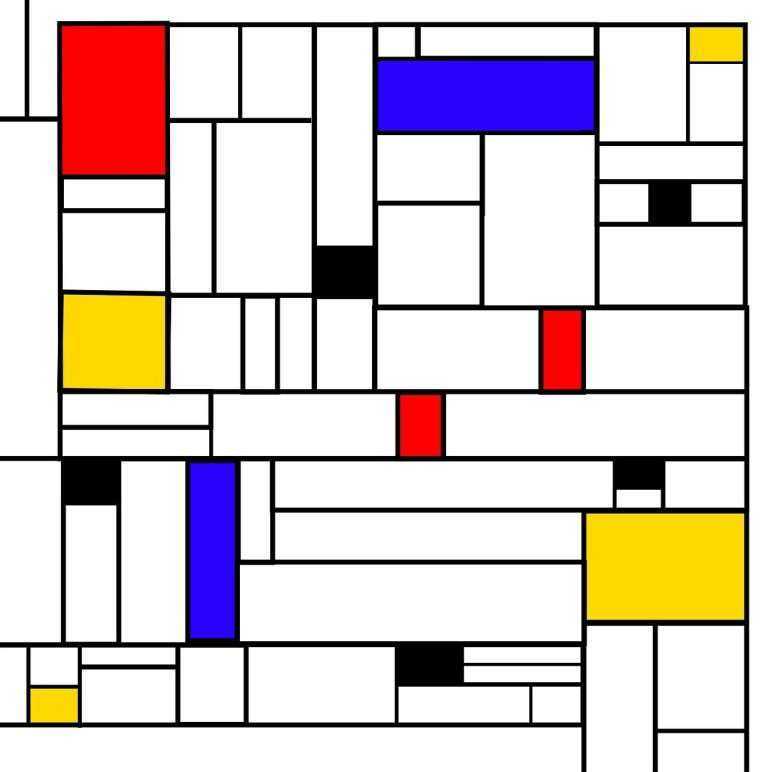
The labyrinth also makes a strong case in Nasimo’s ‘Labyrinth’: 
What drove you to create this piece? “It’s part of an old exhibition and presents the way in which we make sense of things or construct them. The idea of the labyrinth is that we, in every waking moment, are in search of ourselves and aim to better our conscience and hopefully find our place in this world.”
Do you ever think of the mind as a labyrinth? “Oh, I am convinced of this. The greatest challenge in life is to make our minds our friends because it could be a terrible master. We mustn’t let our minds guide us.”
I’ve always been thinking in the same direction. How difficult it is to subdue the appetites of our mind? “It’s hellishly hard. And you know why? Nobody has ever told us what the mind actually is. Nobody tells us what it is, how it functions, and how to live overall – we are left to fend for ourselves. It’s as if we’ve hopped into a random cab and told the cabby, “Drive”. “Where to?”, he asks and we reply with, “It doesn’t matter, just drive”. That’s why we must have some sort of goals, and imagination, and be resolute about what milestones we wish to reach.”
But labyrinths shouldn’t be heady questions or odious tasks, as it’s the case with many booby-trapped mazes in cinema (just like Maze Runner and Indiana Jones have shown us). The moment we step into Medieval times, these winding structures cease to be puzzles and morph into meditative edifices conducive to introspection and salvation. In the naves of cathedrals and even courtyard lawns, 9th-10th-century artists took a creative departure from classical Cretan/Minoan labyrinths that display 7 windings, and added 4 more to produce 11, Christianity’s number of sin. Now rotate the labyrinth westward, a destination many thought of as a direction towards death, and you have an image of a godless, alienated symbol. To not render it completely taboo, artists would put a cross on top hinting at the figure of Christ. Their motivation? Give a glimmer of hope to those ensnared by the devil’s tangle who will find escape in the face of God.
In a podcast episode for 2&200, you mention the trials and tribulations you’ve gone through. How do you manage to control your impulses? In some aspects, I’ve muzzled some parts of my mind – those that are into alcohol, drugs, and high speeds. I’ve loved adrenaline since a child, that’s why I found skateboarding so appealing. And instead of drawing still lifes, I was chased around town for spraying walls. While some societies are busy going inside the labyrinth and others are looking for a way out, the ancient motif spills into other cultures and is refracted through entirely different lenses. In Judaic art, the labyrinth is nothing more than a model of their holy city – Jericho. And likewise is said of Romans in their pagan era, who identified the structure with the city of Troy, home of Aneas, their most important settler.
A subject of contemporary artThe labyrinth hasn’t been milked so much as to appear today only as gardening decoration. Artists have recognised its prevalence in pagan and orthodox religions and have granted its (the labyrinth’s) multiple faces the reality and acknowledgment they deserve.  The Connemara Sculpture of Richard Long is a humble example of labyrinthine art. It’s a small gesture of an artist’s tampering with natural landscapes. Its focus hasn’t much to do with labyrinths per se. The labyrinth bears resemblance to the above-mentioned Domus de Janas Sa Menta, but Long’s natural installations adopt the labyrinth for almost aesthetic purposes. He taps interest elsewhere – to observe how nature readjusts human-made, open-air compositions and eventually plants them under its thick layers. No matter our lofty pretences of artistic ingenuity and creation, all of our efforts are at the mercy of nature and wouldn’t be spared for too long.
 In roughly the same realm of art, the artist Rabarama sees the labyrinth and maze as an external and material representation of ourselves. She wedges her subjects “between fate (genetic basis) and free will”, forever split by the forces of bodily limitations and boundless imagination and desire. And if we claim triumph over our genetic limitations it’s thanks to the “travel” into the interior self and at the same time towards the other actors on the stage of existence (other human beings, nature)”. 
Back to Nasimo. Did your younger self think that those transgressive acts were liberating? Do you feel that know weren’t as free as you initially thought? “I wasn’t doing it consciously. Yes, I was free, but external forces were trying to put me behind bars. These are the unhealthy restrictions. I have my own limits now, but such boundaries must be set by someone who loves you and is wiser than you. Not by someone who wants to control you.”
And how do you set and maintain these boundaries? “They are not self-imposed, actually, they’ve been given to me by a spiritual teacher; from people who have seen and recognised The Truth. Succeeding in such matters is like making it in any other field – you must have a teacher who guides you along the process.”
I know David Lynch says that meditation does wonders for imagination and creativity. “Oh, yes, meditation is the best because you are directing your brainpower to a single point, and, if done correctly, that could elevate you to the heavens.”
Is that what you mean by the red line at the centre of the labyrinth? “Yes, the centre is where the source of our mental energy is. The closer you get to it, the stronger you’ll feel it.”
So you think meditation is something helpful for guiding our mind? Absolutely. Organically generated text by Simeon Cherepov
|